


Good morning.
I’m Mitsui, a web3 researcher.
Today I researched “zERC20”.
What is zERC20?
Transition and Outlook
Privacy is one of the trends for 2026, alongside AI and stablecoins.
TL;DR
zERC20 is a privacy-focused extension standard that wraps existing ERC-20 tokens to anonymize them, using zero-knowledge proofs and Proof of Burn to conceal the relationship between sender and recipient.
It enables anonymous transfers while autonomously adjusting liquidity through multi-chain support and a dynamic fee model, all while maintaining standard wallet operations.
The INTMAX team developed the mainnet, which launched in 2026. Moving forward, it aims to become a practical on-chain privacy foundation through Permit support, ZK enhancements, and the rollout of payment products.
What is zERC20?
zERC20 is a privacy-focused token standard that extends the ERC-20 specification, serving as a technical foundation for anonymizing existing ERC-20 tokens through wrapping.
Transactions on the blockchain are highly transparent, presenting the challenge that once published, they become visible to anyone. For instance, if salary or rent payments were exposed to the entire world, it could lead to leaks of corporate strategy or unfair demands between individuals.
Traditionally, mixing services like Tornado Cash have been used to address this issue. However, since deposits and withdrawals to specific contracts are publicly visible, their use is easily monitored, posing a risk of being banned by regulatory authorities.
Against this backdrop, the zERC20 project was developed with the goal of achieving high privacy without altering the existing user experience.
zERC20 implements the concept of Ethereum Improvement Proposal EIP-7503, “Zero-Knowledge Wormhole (zk-Wormhole),” providing a mechanism that allows anyone to anonymously transfer assets using their regular wallet operations. It is characterized by mitigating the drawbacks of transparency on the blockchain while preserving the benefit of verifiability.
◼️Mechanism
Transactions on zERC20 utilize a “Proof of Burn” mechanism that employs zero-knowledge proofs (ZKP), and its operation is as follows:
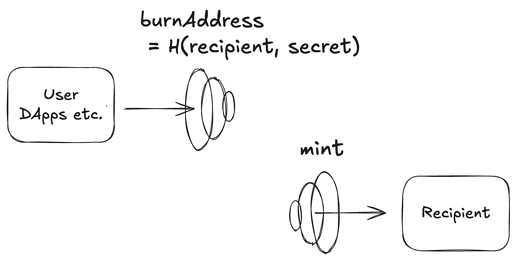
User A (the sender) sends tokens to a “burn address” calculated from the recipient B’s public address and secret value. A burn address is a random address without a private key; tokens sent here become temporarily immovable.
After that, B (the recipient) proves a secret value known only to them using a zero-knowledge proof, thereby minting an equivalent amount of zERC20 tokens to their new address.
As a result, the transaction is recorded on-chain in a manner indistinguishable from a standard ERC-20 transfer, making the connection between A and B invisible to third parties.
This method achieves both anonymity—where no transaction links are ever disclosed—and compatibility with existing infrastructure.
Furthermore, as it is a specification that extends the ERC-20 standard, it supports multiple Layer 1 and Layer 2 chains such as Ethereum, BNB, Arbitrum, and Base. A key feature is its seamless interoperability with standard wallets (like MetaMask) and existing DeFi protocols. Users do not need to install special applications; it is designed so that simply performing standard ERC-20 token transfer operations allows the sender and recipient relationships to remain confidential.
Furthermore, zERC20 enables private transfers across multiple chains using LayerZero technology. For example, cross-chain anonymous transfers—such as withdrawing anonymous assets issued on Arbitrum to Base—are possible by default, with future expansion to non-EVM chains planned.
◼️How to Use
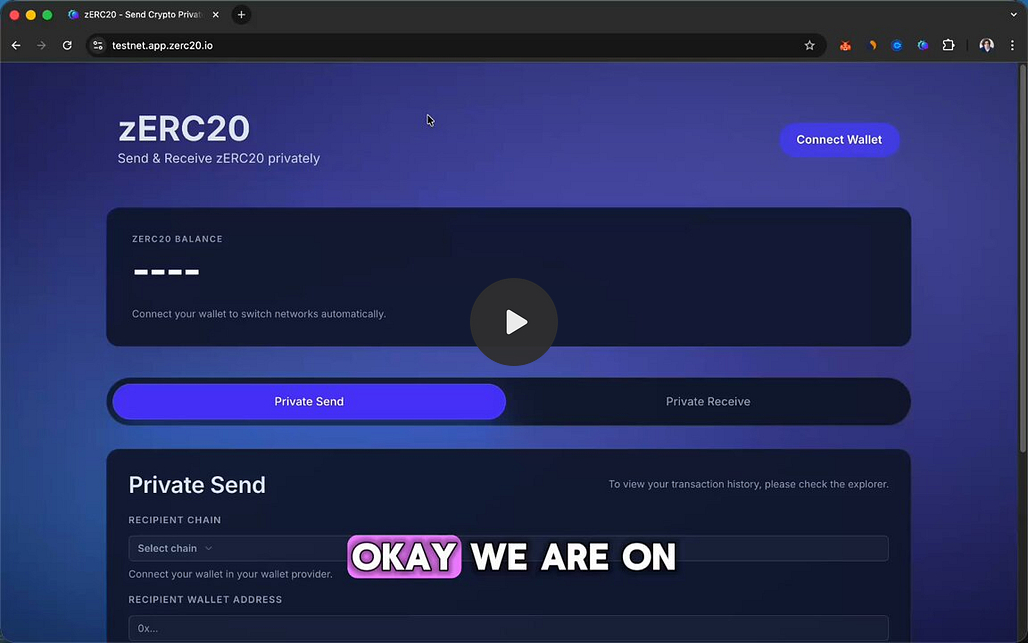
As we’ll explain in later sections, since it was just released on the mainnet, use cases are still limited. Developers can embed it into their own services, but users can get an early experience through the dedicated app.
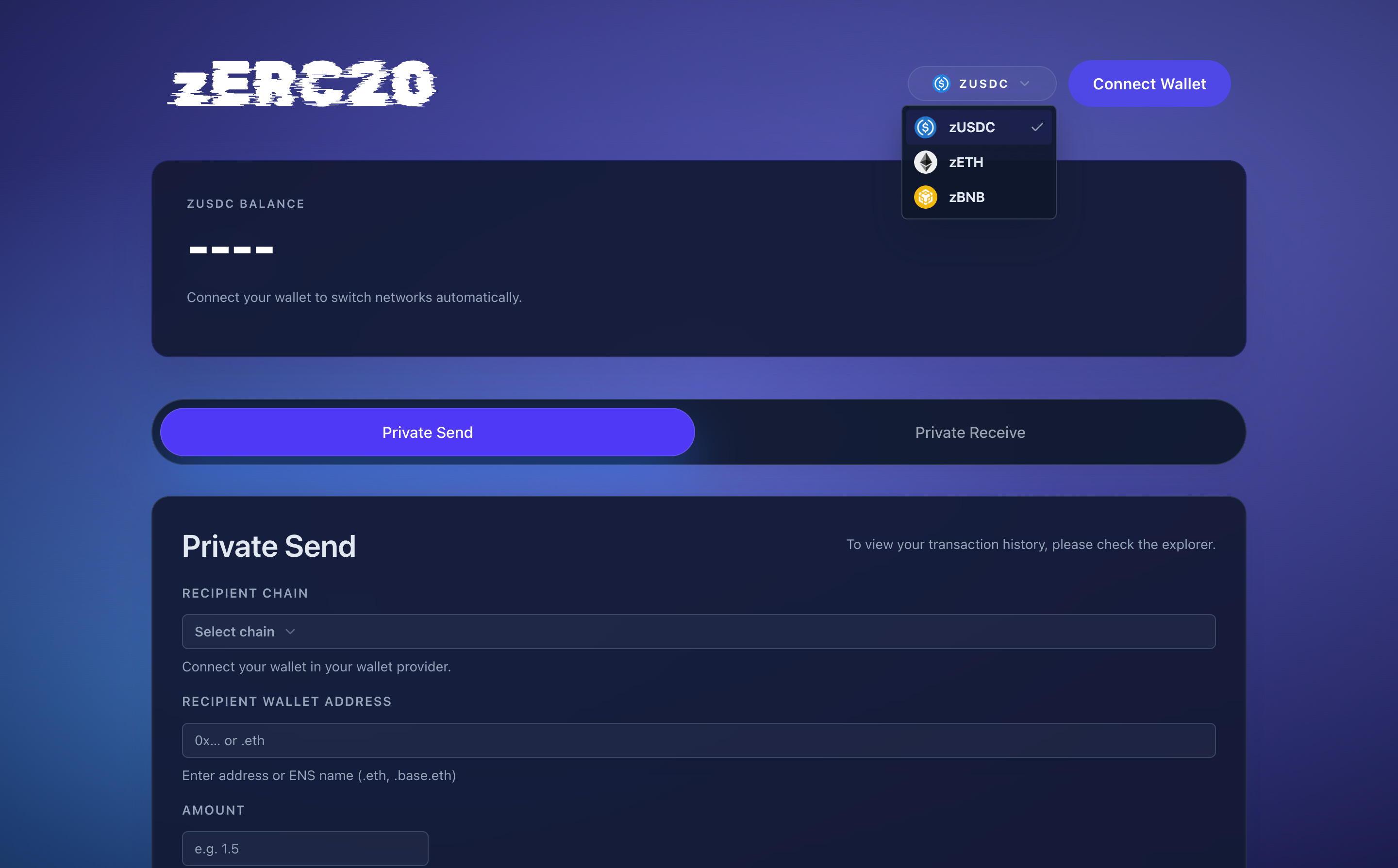
Essentially, the original asset is wrapped to convert it into a zAsset. Sending this zAsset triggers the Proof-of-Burn transaction mechanism, as described earlier.
Additionally, a fee model is incorporated for wrapping and unwrapping. When liquidity becomes insufficient on a specific chain, fees are used to suppress unwrapping, while rewards are provided to incentivize wrapping.
Specifically, each chain has a target liquidity level set. If the actual liquidity falls below this target, a fee is charged for unwrapping on that chain. Conversely, a reward is paid for wrapping on the chain experiencing the shortage.
For example, “When the USDC pool on Ethereum is insufficient, fees are charged when unwrapping zUSDC back to USDC on Ethereum (to discourage outflows), while users depositing USDC into zUSDC on Ethereum receive rewards (to encourage inflows).” Fee revenue is shared across chains and allocated toward future reward payments. Note that,
If unwrap fees surge on a particular chain, the system also provides the functionality to unwrap assets via a different chain using the LayerZero/Stargate bridge. This allows users to withdraw their original assets via the most advantageous route, enabling the system as a whole to self-adjust its liquidity balance.
Transition and Outlook
zERC20 was proposed and implemented by the development team (Ryodan Systems AG) of the Japan-based blockchain project INTMAX.
INTMAX is a startup developing a stateless Ethereum Layer 2 solution (a zkRollup+Plasma hybrid), led by CEO Reona Hioki and comprised of a team of engineers and researchers.
ERC20 itself was first unveiled in a testnet version at the end of 2025, showcasing privacy transfers of assets like USDC on Arbitrum and Base.

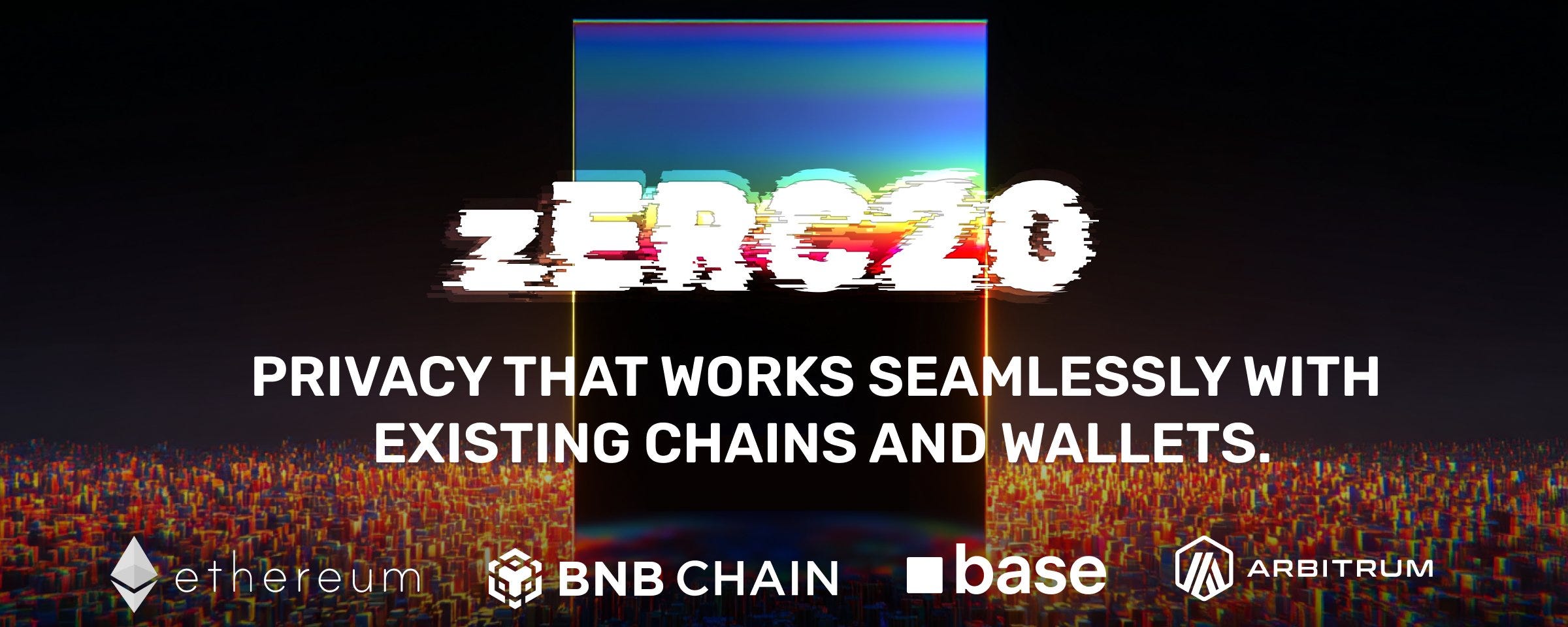
Then, in February 2026, the mainnet launch commenced on the Ethereum, BNB, Base, and Arbitrum chains.
We have also outlined several roadmaps for future developments.
April 2026
Plans to implement ERC-20 Permits (on-chain signature-based approval functionality). This is expected to enable permissioned transfers using digital signatures, thereby improving usability.May 2026
Support for the Ethereum Foundation’s new ZK library “Sonobe” (enabled). By incorporating the latest zero-knowledge proof technology, we aim to achieve further performance improvements and feature enhancements.Second Quarter of 2026
Public release of the smart contract integration and payment product “Payless.” Smart contract integration enables direct handling of zERC20 tokens within other contracts (such as DeFi apps), expanding the application scope of anonymous payments. Payless is also seen as a payment terminal (payment acceptance system) utilizing zERC20, currently under development as a solution enabling cryptocurrency payments without concern for gas fees or hassle.
Furthermore, future implementation on non-EVM chains is also under consideration. zERC20 aims to realize a future where anyone can naturally utilize privacy with the same ease of use as standard ERC-20 tokens.
Privacy is one of the trends for 2026, alongside AI and stablecoins.
Finally, we conclude with a summary and analysis.
At the end of last year, I wrote an article about the outlook for 2026, and many VCs and influencers touched on the importance of privacy. Furthermore, starting from the end of last year, we actually saw rising token prices and increased funding in the privacy sector.
Stablecoins are the most straightforward example, but as their use grows in daily life and business activities, excessive transparency becomes problematic. If individual or corporate wallets are exposed, it reveals asset status and fund transfer details.
Currently, solutions include using private chains or effectively leveraging CEXs to cut off transactions, but this conflicts with the philosophy of on-chain transactions.
Additionally, while methods like generating new addresses for each transaction—such as stealth addresses—are being considered, this leads to a proliferation of wallets. While this proliferation isn’t a major issue if wallets can seamlessly integrate with tax-related tools, it can become cumbersome to manage when strict oversight is required, such as for corporate use.
So, I believe the optimal solution for this area is still being explored, but zERC20 is very interesting as it implements an extension of the existing ERC-20 standard. Other privacy-focused tokens often operate at the protocol level or the chain level, which can sometimes lack a good user experience. When implemented at the chain level, you have to move funds to that specific chain, which is cumbersome.
This is something I felt when x402 emerged as well: unless a new standard can be implemented with virtually no effort required to adapt existing services, it becomes extremely difficult to gain widespread adoption. In the early phases of crypto, I believe users would have adapted each time. However, now that a certain ecosystem has already been established, the barrier to moving users is high. I feel it has become more rational to quickly consider integration with the existing ecosystem.
In that sense, the zERC20 approach makes perfect sense, and I’m very excited to see how it develops going forward. I plan to experiment with it myself.
That concludes our research on “zERC20”!
Reference Links:HP / X / DOC / zERC20 : Cross-Chain Private ERC-20 Based on ZK Proof-of-Burn
Disclaimer:I carefully examine and write the information that I research, but since it is personally operated and there are many parts with English sources, there may be some paraphrasing or incorrect information. Please understand. Also, there may be introductions of Dapps, NFTs, and tokens in the articles, but there is absolutely no solicitation purpose. Please purchase and use them at your own risk.
About us
🇯🇵🇺🇸🇰🇷🇨🇳🇪🇸 The English version of the web3 newsletter, which is available in 5 languages. Based on the concept of ``Learn more about web3 in 5 minutes a day,’‘ we deliver research articles five times a week, including explanations of popular web3 trends, project explanations, and introductions to the latest news.
Author
mitsui
A web3 researcher. Operating the newsletter “web3 Research” delivered in five languages around the world.
Contact
The author is a web3 researcher based in Japan. If you have a project that is interested in expanding to Japan, please contact the following:
Telegram:@mitsui0x
*Please note that this newsletter translates articles that are originally in Japanese. There may be translation mistakes such as mistranslations or paraphrasing, so please understand in advance.