


Good morning.
I’m Mitsui, a web3 researcher.
Today I researched “Plutus.”
What is Plutus?
Transition and Outlook
A Neo-Bank Aiming for a Sustainable Loyalty Program
TL;DR
Plutus is a neo-bank app that offers at least 3% cashback on Visa debit card payments with a subscription plan, integrating fiat currency and cryptocurrency management.
Features include non-custodial dual accounts, internal DEX, Perks (50+ partners), and service exchange (redeem PLU/PLUS for practical value). Rewards will be granted in +PLUS starting in 2024.
Reward rates and Perks tiers increase based on PLU holdings, and long-term holders can also earn CRY. Meanwhile, for sustainability, the system has been reformed to a dual-token model with fee circulation (like FUEL).
What is Plutus?
“Plutus” is,A neo-bank offering a minimum 3% cashback reward on all payments made through the Plutus cardIt is an application designed for everyday use, featuring functions for holding fiat currency and crypto assets, card payments, and loyalty rewards.
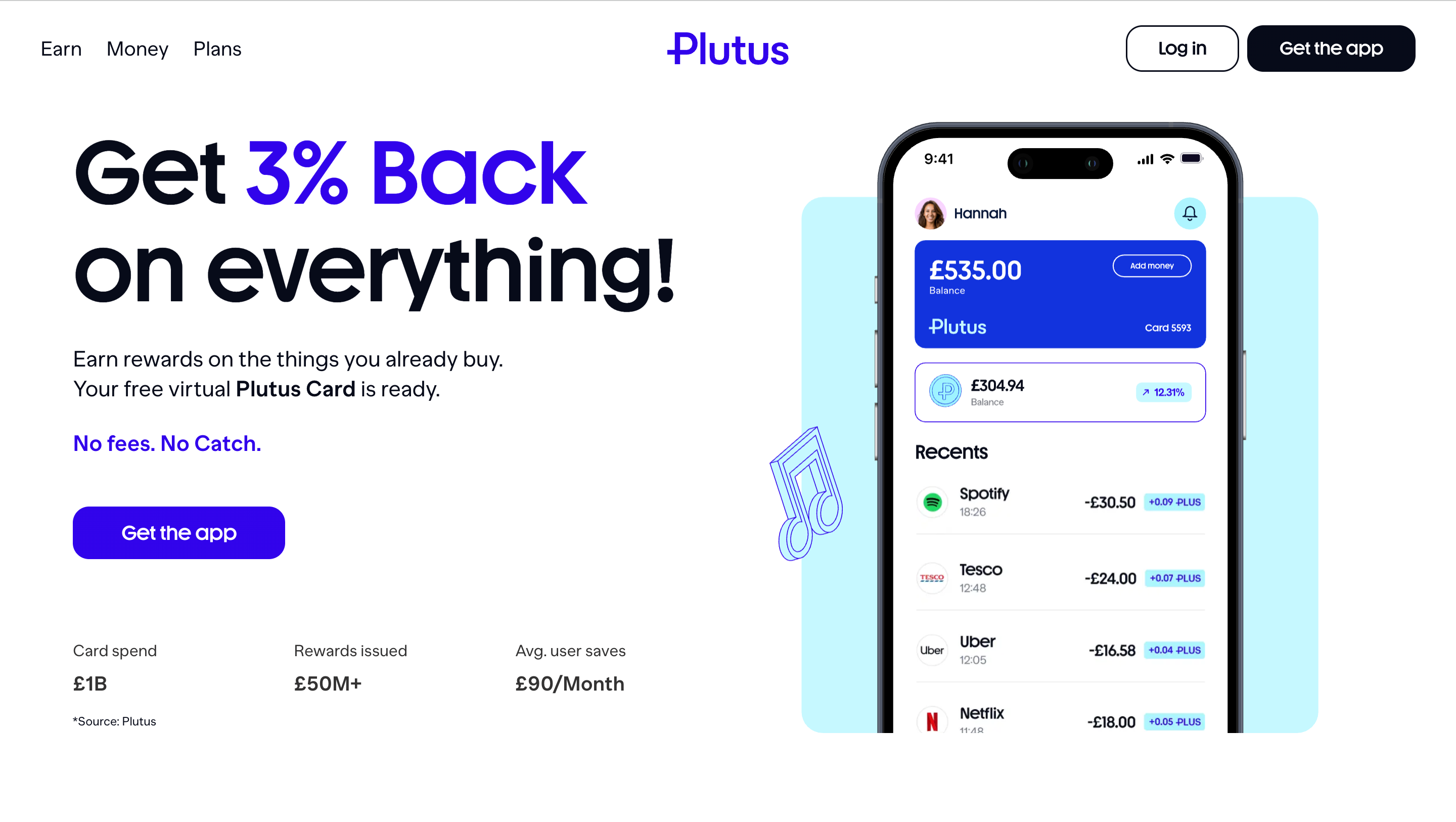
The main features provided are as follows.
◼️Visa Debit Card (Physical/Virtual)
Users can obtain a plastic Visa debit card for use at Visa-accepting merchants both online and offline. Virtual cards are also available, enabling contactless payments via smartphone with Apple Pay and Google Pay.
◼️Non-custodial dual account
Within the Plutus app, you can manage both your fiat currency account (GBP account for the UK, Euro account for Europe) and your cryptocurrency wallet. Fiat currency accounts are securely held via Modulr’s payment infrastructure, with deposits 100% held in trust accounts at institutions such as the Bank of England.
The cryptocurrency wallet is self-custodial. While a wallet is generated within the app by default during initial setup, users can also connect an external wallet such as Metamask and integrate it as a “Connected Wallet.”
◼️Cashback Rewards
Plutus’s most distinctive feature is its cashback system using this cryptocurrency. Users receive rewards ranging from 3% to a maximum of 9% based on their card spending. This rebate is granted not in cash, but in Plutus’s proprietary loyalty token.
Starting in 2024, rewards will be returned in the form of in-app points called “+PLUS Points” rather than directly in PLU tokens.
The uses and positioning of each token will be explained later.
◼️Perks
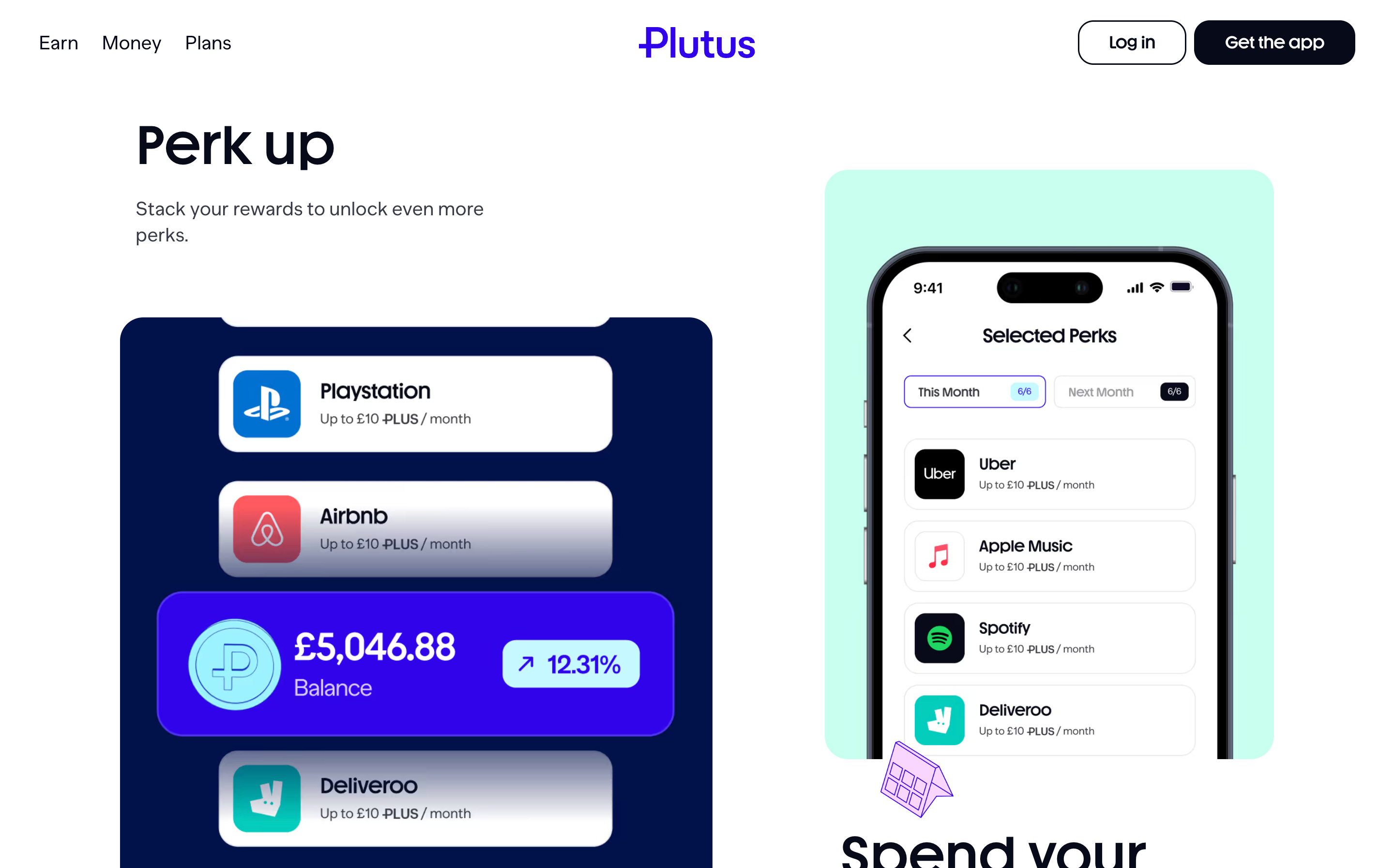
In addition to crypto cashback, we also offer cashback rewards at partner brands. Users can select multiple Perks each month and receive cashback of up to £/€10, covering 100% of their spending when they pay with their card at participating stores.
As of 2026, Perk partners include over 50 brands, encompassing popular companies across diverse sectors such as subscriptions like Netflix, Amazon Prime, Disney+, and Spotify, as well as transportation services like Uber and Bolt.
For example, if you select the “Netflix” perk, paying your Netflix monthly fee (approximately £10) with your Plutus card will earn you that £10 back as a reward at a later date.
◼️Subscription Plans
Plutus offers three monthly plans (Starter, Everyday, Premium), with each plan featuring a different monthly spending limit for rewards and a different number of free Perk benefits.
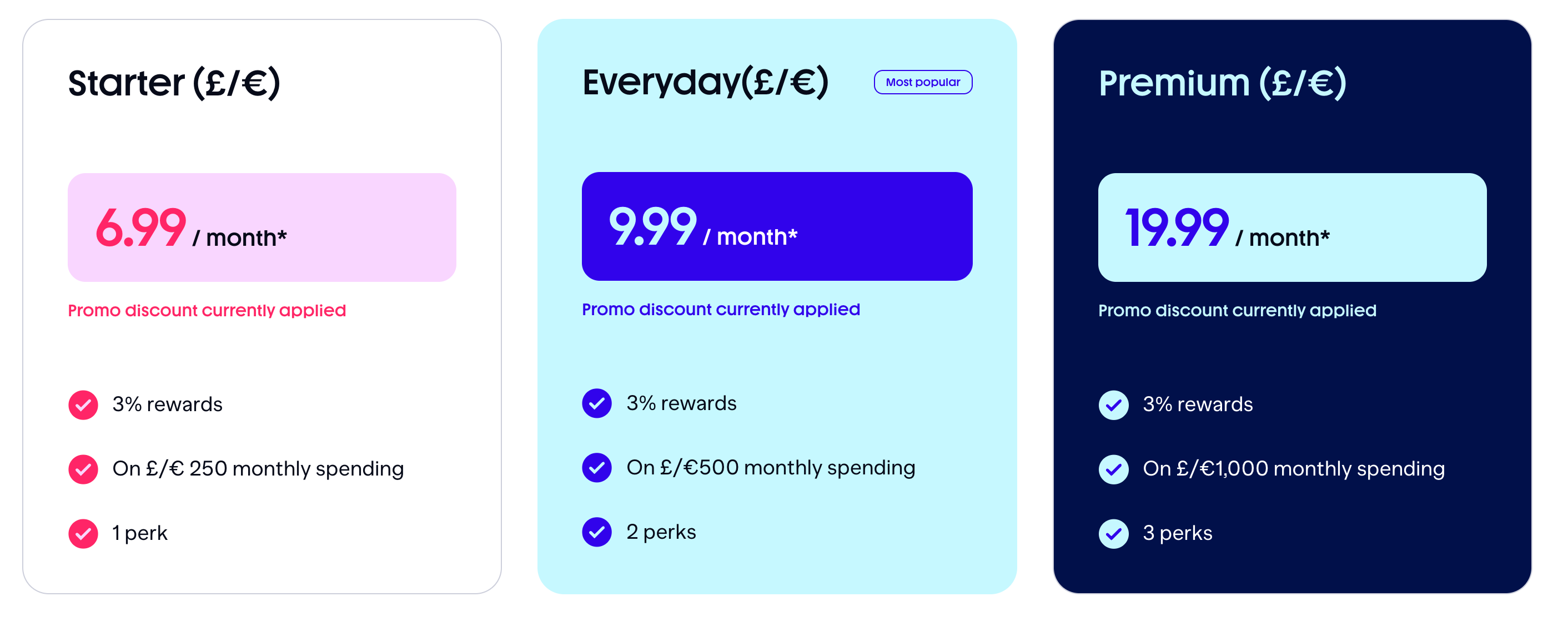
The system is designed so that rewards cannot be earned without subscribing to a plan; to receive cashback, you must subscribe to some plan.
However, the rewards are designed to exceed the monthly fee. For example, even with the Everyday Plan (approx. £10), spending £500 per month yields a 3% cashback reward worth £15 plus Perk benefits (up to £10), making it well worth the cost.
◼️ Loyalty & Compound Rewards
Plutus is not just a payment app; it offers robust features to promote and manage user loyalty activities.
Reward levels are divided into 10 tiers from Noob (beginner) to Honey Badger (highest tier) based on the amount of PLU a user holds, with each tier offering additional cashback rates and Perk slots.
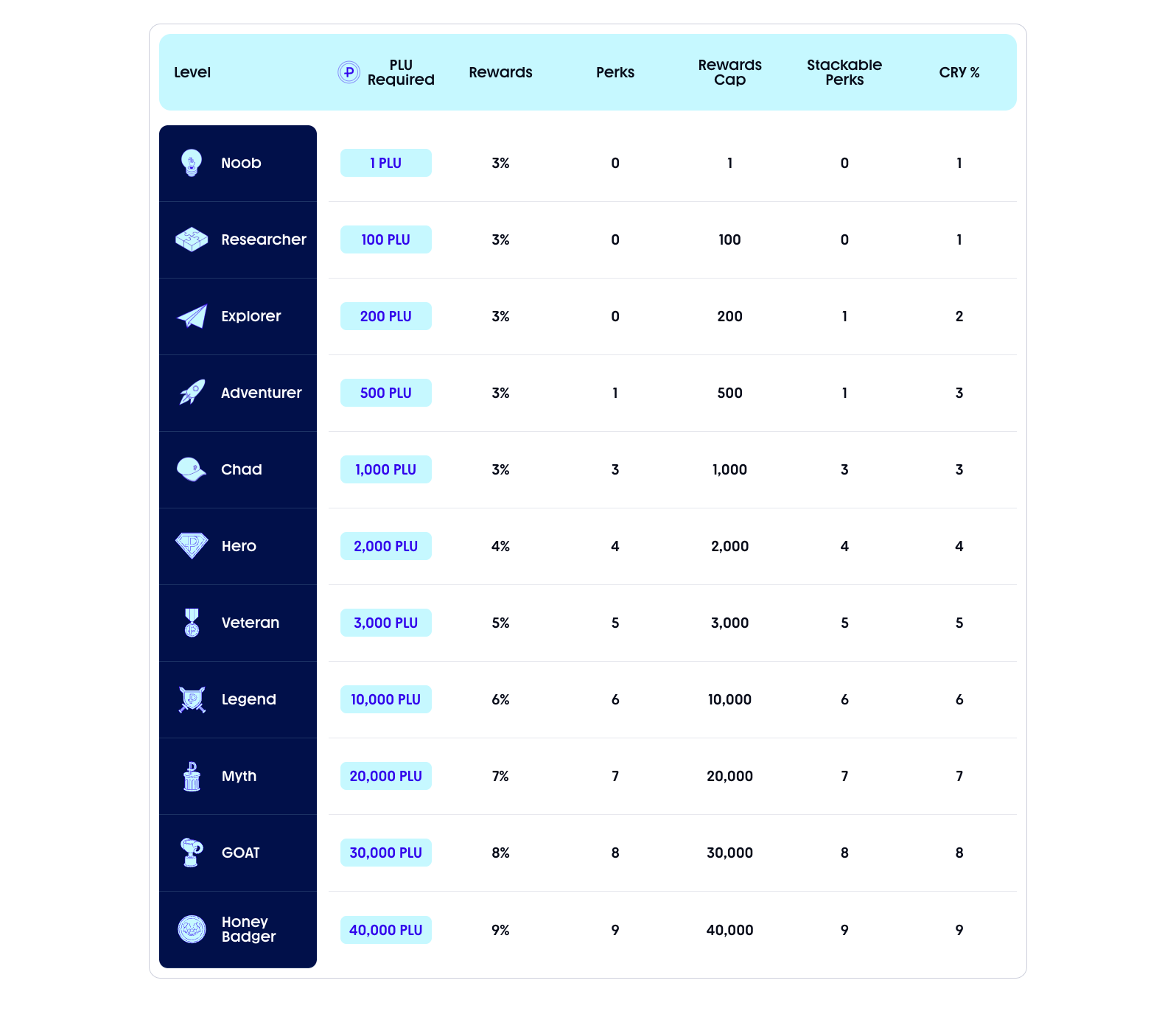
Reward levels are displayed on the in-app dashboard, with the required PLU count for the next level clearly shown. Users can advance to higher levels by stacking (holding) the PLU they earn as rewards, creating an incentive to reinvest rewards and increase future reward rates.
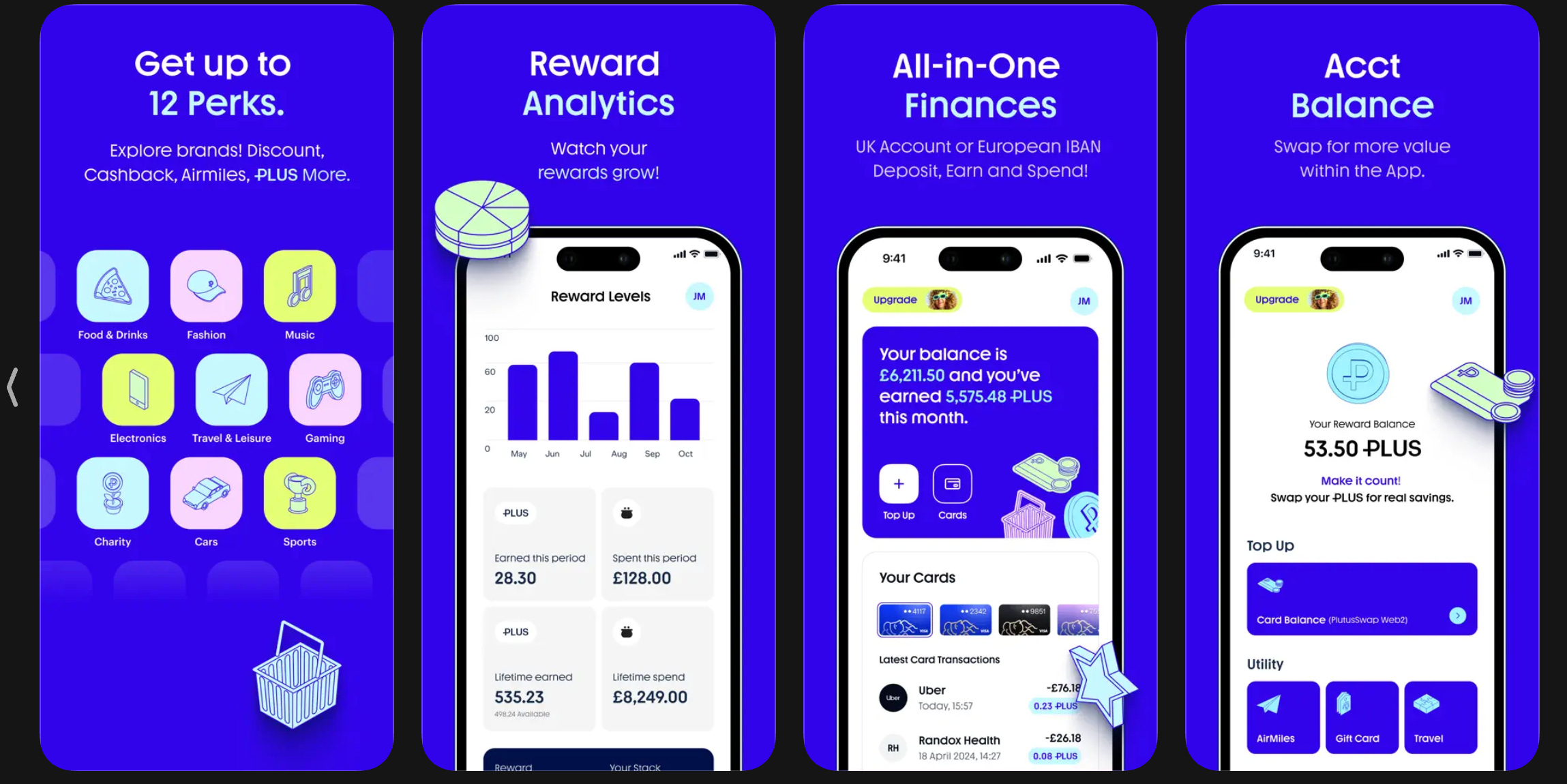
Compounding Rewards Yield (CRY) is a bonus reward earned when users hold PLU long-term. Specifically, monthly PLUS rewards are additionally granted at an annual rate corresponding to the reward level.
For example, a Veteran user (3000 PLU, 5% reward level) who holds PLU without moving it for one year will earn PLUS points equivalent to an annual rate of 5% during that period. This CRY% matches the reward level percentage, and the CRY interest rate increases as the level rises.
◼️Internal DEX
It features a built-in DEX function called PlutusSwap for instantly exchanging cryptocurrencies and fiat currencies.
Users’ fiat currency is converted into deposit-based stablecoins, which can be exchanged for major cryptocurrencies like ETH or proprietary tokens such as PLU. Moving forward, we plan to introduce incentives for pool providers (Pool & Earn feature) to build an ecosystem where the user community itself sustains the DEX’s liquidity.
◼️Service Exchange Function
This feature allows you to exchange PLU/PLUS for real-world services.
This initiative not only allows tokens received as rewards to be used externally, but also ensures that each token holds a minimum value of at least ¥〇〇.
For example, Plutus Miles, Plutus Travel, and Plutus Gifts exist, and it is explicitly stated that “one PLU can be exchanged for something worth £10.”
If the market price is lower than that, users will choose to exchange their miles. Conversely, if the PLU price is £15, they will sell it on the market. By offering users a choice that is never disadvantageous to them, regardless of the outcome, a sense of security about holding PLU is created.
◼️Summary
This is an application that provides a minimum 3% cashback when you register for a subscription and make payments using a dedicated card.
Cashback can be earned in the form of the in-app token PLUS, which you can choose to convert into the proprietary token PLU, exchange for products, or sell on the marketplace.
By continuing to hold your PLU, your reward level increases, boosting your cashback percentage and expanding your Perks benefits. Additionally, there is a system in place where you can earn extra PLU rewards simply by maintaining your membership.
Furthermore, it is designed to be exchangeable for something valued at 1 PLU = £10 to prevent the market price of acquired PLU from crashing.
Plutus implements this royalty mechanism using a dual-token model.
Transition and Outlook
Plutus was founded in the UK in 2015 by Daniel Daychopan and Jasper Tay, and has a considerable history.
We will explain the evolution leading to the current form, including the dual token model described above and the value-backed model where 1 PLU = £10.
◼️2015: Founded the company
At the time, it was difficult to use cryptocurrencies like Bitcoin in everyday life, so we started with the idea of a “debit card that allows payments with cryptocurrency anywhere.”
Mr. Daychopan launched the UK’s first Bitcoin exchange in 2013, aiming to make cryptocurrency usable not only for speculation but also for real-world purchases.
The initial concept involved creating a system where users could make payments at Visa-accepting merchants while retaining self-custody of their own cryptocurrency assets.
Daychopan shared his vision with the Bitcoin community via blog, garnering significant attention. By the end of 2015, he published a white paper and successfully raised funds.
◼️2016: Issuance of Pluton (PLU) tokens and launch of the first product
In 2016, Plutus issued its proprietary royalty token, “Pluton (PLU),” on the Ethereum blockchain.
PLU is also known as the world’s first cryptocurrency royalty reward token, with its white paper released during the early days of the Ethereum blockchain, shortly after its inception.
The initial issuance cap was set at 20 million tokens, with the majority reserved as a “reward pool” for cashback incentives to users. That same year, a token sale was conducted, securing initial funding within approximately one year of the company’s founding.
The original service concept involved users exchanging Bitcoin (later expanded to include Ethereum) for fiat currency via a decentralized mechanism called PlutusDEX, then using that balance to make payments with a Visa debit card.
From late 2015 to early 2016, we interacted with the founding members of Ethereum, and Plutus pivoted its initial focus on Bitcoin to Ethereum.
This enables the early implementation of an advanced model that adopts ERC20 token technology to tokenize loyalty points.
The platform’s core features included a self-custody cryptocurrency wallet and a decentralized exchange (DEX) mechanism, enabling users to exchange cryptocurrencies and fiat currencies directly with each other without going through a centralized exchange.
As of 2016, beta version distribution commenced, with service verification conducted for the community on a limited basis. During this period, Plutus gained attention as a proof-of-concept for cryptocurrency payments, being featured in publications such as Bitcoin Magazine.
◼️2017–2018: Product Development and Partner Exploration
From 2017 to 2018, Plutus sought partners for card issuance and fund transfers while advancing development to realize its services.
In the European market, collaboration with prepaid card issuers and e-money institutions is essential, and Plutus established bases in London and Lithuania while also addressing regulatory compliance.
Around 2018, we began providing physical cards to users on a trial basis through card issuance partners and gathered feedback from early adopters.
At the time, other crypto-asset compatible cards (e.g., Wirex and Crypto.com) were also emerging, but Plutus differentiated itself with its decentralized system allowing users to self-custody their assets.
◼️2019: Expansion of the Reward Model
In 2019, Plutus implemented an update to its rewards system.
In the model proposed in the 2015 white paper, the cashback rate based on PLU was capped at 3% and designed to decrease incrementally as the number of users increased.
However, to fuel the growth of the crypto industry and differentiate itself from competing services, Plutus introduced a more attractive rewards plan. Specifically, it began offering a tiered cashback rate starting at 3% based on holding a certain amount of PLU or subscribing to a paid plan, and also started providing additional benefits called “Perks.”
As of the 2019 update, users could earn high rewards by holding relatively small amounts of PLU, and this strategy contributed to growth in both user numbers and transaction volume. However, this design also created the challenge that the reward pool could potentially be depleted if Plutus scaled to millions of users.
In fact, since its sustainability was projected to be in jeopardy by 2026, Plutus began research and development on the autonomous token circulation model described later.
◼️2020–2021: Service Growth and Market Expansion
From 2020 to 2021, Plutus’ user base gradually expanded, and service rollout across Europe gained momentum. Around this time, marketing activities also intensified, promoting the Plutus card as an innovative service that earns cashback when making real-world purchases with cryptocurrency, under the slogan “Bank on Crypto.”
Furthermore, alongside the growing momentum of the cryptocurrency market, the PLU token itself began listing on major exchanges. In September 2021, Coinbase started handling PLU, and it subsequently listed on international exchanges such as Huobi, KuCoin, and Bitfinex.
◼️2022: Refresh to Rewards 2.0 and Record Growth
A major upgrade titled “Rewards & Accounts 2.0” has been implemented, significantly enhancing the return rates and benefits for users.
Specifically, three new subscription plans (Starter/Everyday/Premium) and four staking levels have been introduced. While everyone can receive 3% crypto cashback, holding a certain amount of PLU allows users to increase their cashback rate up to a maximum of 8%.
Additionally, the Perks options have expanded to over 20 choices, allowing you to earn rewards of up to 100% cashback (up to £/€10 per month) on subscriptions and purchases from popular brands like Netflix, Spotify, Amazon Prime, Uber, Disney+, and major supermarkets (Tesco, Aldi).
This revamped rewards program was extremely popular with users, leading to such a surge in new card applications within just six days of its announcement that inventory ran out, necessitating a waitlist system.
◼️2023: Strengthening Foundations and Preparing for U.S. Expansion
2023 was a year of strengthening foundations and making adjustments to ensure the sustainability of services that had experienced rapid growth the previous year.
First, we have transitioned our card issuance infrastructure. We have moved from our previous card provider partner to a partnership with Modulr, a highly reliable payment platform operating under UK regulation, and launched a new card program. This has significantly enhanced the user experience, enabling virtual card issuance, support for Apple Pay and Google Pay, higher deposit and withdrawal limits, and instant integration between the card and account balance.
Additionally, in spring 2023, we temporarily suspended PlutusDEX services to focus on system renewal. Regarding the resumption of DEX services for UK users, we have decided to postpone this until our application for registration as a crypto asset business with the FCA (Financial Conduct Authority), submitted in May 2022, is approved.
Regarding the reward system, we implemented a trial version of the new “Difficulty Adjustment (DA)” rule in July 2023, as previously announced in 2022. DA, modeled after Bitcoin’s mining difficulty adjustment, is a feature designed to gradually tighten reward conditions to curb PLU inflation and enhance sustainability.
Specifically, we adjusted the policy to grandfather existing users (early adopters) under the previous conditions while requiring new users to hold more PLUs.
However, this measure led some users to transfer their PLU to external wallets to reap the rewards without contributing, prompting complaints from the community.
The Plutus team, taking user feedback into account, has committed to withdrawing DA in the latter half of 2023 and instead implementing fundamental token economy reforms. The result of this months-long planning process is the “Plutus 2024 White Paper.”
This white paper was put to a community vote at the end of July 2024 and approved by a majority of 63%. As detailed later, its theme was “Transition to a 100% Self-Sustaining Reward System,” marking a major reform since Plutus’ founding.
◼️2024: Transition to a Self-Sustaining Ecosystem
Following the 2024 White Paper approved by the community, multiple core feature updates have been implemented.
Major changes include transitioning to a dual-token economy with PLU and PLUS Points, resetting reward levels, introducing a circulating fee model called FUEL, and rolling out various utilities (service exchanges).
First, on August 1, 2024, the first phase introduced new reward level requirements, adjusting reward rates and benefits based on accumulated PLU stacking amounts. Then, from October to December 2024, four types of utilities usable within the Plutus app—airline miles, gift cards, travel, and cashback NFTs—were successively released. Users can now directly spend PLU within the app to receive discounts and benefits.
These utilities partner with external companies; for example, Plutus provides vouchers purchased at corporate discount rates for gift cards, allowing users to buy popular brand gift cards using PLU (with a discount value equivalent to approximately 10%).
As a travel agency partner for travel reservations, we receive up to 25% commission on hotel and flight bookings, with the majority of this returned to users as cashback.
Furthermore, with PLU-based cashback NFTs, users can win NFTs featuring cashback links usable at partner brand online stores through a lottery. Plutus earns up to 25% affiliate revenue during this process while returning a portion to users.
These are designed to provide users with a minimum practical value of £10 per PLU, effectively anchoring the value of the PLU to a stable benchmark.
Following these changes, by the end of 2024, Plutus will have transitioned to a new model where user engagement and fee circulation sustain operations. This will be achieved while maintaining a user base of approximately 125,000 to 150,000, cumulative reward distributions worth £50 million, and annual reward issuance at a scale of £5 million.
◼️2025: Establishment of a Dual Token System
In 2025, the dual-token system planned for 2024 began full-scale operation.
Specifically, a two-tier structure was established: “Rewards are granted in PLUS Points, while PLU is used for loyalty status.”
On the technical front, the on-chain migration of PLUS Points (officially named “PLUS More”) was announced on May 13, 2025. Plutus has deployed the PLUS token on Base and activated a system enabling reward points to be exchanged on-chain.
The on-chain fee mechanism called FUEL was also implemented at this time. This is a network fee (gas) embedded within transactions on Base, operating as a model that covers rewards through fee recycling rather than token issuance.
When users send PLUS or swap on PlutusSwap, 1–5% of the transaction amount is automatically deducted as a fee. This fee is returned to the pool and allocated for future reward payments.
Furthermore, in the first half of 2025, the Reward-as-a-Service (RaaS) concept was also announced, revealing plans to enable other companies to connect to Plutus’ PLUS network and issue their own proprietary loyalty programs. If realized, this is expected to generate demand for PLU/PLUS from outside the Plutus ecosystem, leading to ecosystem expansion and diversification of revenue streams.
Neobank Aiming for a Sustainable Loyalty Program
Finally, we conclude with a summary and analysis.
Recently, the crypto card market has been gaining momentum, and within it, cashback on card payments is also becoming a trend. Plutus has been working in this area since 2015, making it one of the leading companies.
It may have been a bit lengthy, but I detailed our evolution since founding to illustrate how we’ve already tackled the barriers faced by neo-bank apps offering cards and cashback.
While regulatory aspects of card payments are important, the primary focus is on designing a loyalty program with sustainable cashback.
Currently, many crypto card projects promote cashback using their own tokens. There are two problems here.
The first issue is funding. The question remains: how can we continue providing cashback after allocating the portion included in the rewards?
Second is stabilizing the token price. Even if you receive a 5% cashback, if the token’s price drops to one-tenth of its value, it effectively becomes equivalent to a 0.5% cashback. Furthermore, as the number of users increases and the amount of cashback grows, the market circulation increases, diluting the tokens.
If no action is taken, the token price will decline as the number of users increases and the amount of rewards distributed grows. Furthermore, as the token price falls, the amount of tokens that must be distributed increases, leading to the early release of the allocated portion.
Furthermore, reducing the discount rate midway risks losing market share to competitors.
To address this issue, Plutus has proposed several solutions to build a sustainable ecosystem. First, it established a fixed-value exchange system for goods to stabilize prices. Furthermore, it designed the system so that during goods exchanges, affiliate commissions from partner companies are received, eliminating the need for Plutus to bear the costs itself.
Additionally, we implement initiatives such as recovering internal swap fees and transfer fees, using those funds for buybacks, and increasing the cashback rate the longer and more tokens are held.
Since these reforms were implemented last year, it’s unclear how things will develop going forward, but I look forward to following their progress!
That concludes our research on “Plutus”!
Reference Links:HP / X
Disclaimer:I carefully examine and write the information that I research, but since it is personally operated and there are many parts with English sources, there may be some paraphrasing or incorrect information. Please understand. Also, there may be introductions of Dapps, NFTs, and tokens in the articles, but there is absolutely no solicitation purpose. Please purchase and use them at your own risk.
About us
🇯🇵🇺🇸🇰🇷🇨🇳🇪🇸 The English version of the web3 newsletter, which is available in 5 languages. Based on the concept of ``Learn more about web3 in 5 minutes a day,'' we deliver research articles five times a week, including explanations of popular web3 trends, project explanations, and introductions to the latest news.
Author
mitsui
A web3 researcher. Operating the newsletter "web3 Research" delivered in five languages around the world.
Contact
The author is a web3 researcher based in Japan. If you have a project that is interested in expanding to Japan, please contact the following:
Telegram:@mitsui0x
*Please note that this newsletter translates articles that are originally in Japanese. There may be translation mistakes such as mistranslations or paraphrasing, so please understand in advance.